Three safe ways an AI agent can take a card payment on a call, why the agent must never hear the card number, and what PCI DSS, call recording rules and UK and EU authentication rules ask of a small business.
An AI phone agent takes a card payment safely in one of three ways: the caller keys the card number on their keypad and the tones are hidden from the agent, the agent texts a payment link and waits while the caller pays on their phone, or it charges a card the customer already has on file. In all three the AI never hears, reads or stores the card number. That's the whole trick, and it's what keeps a small business on the shortest PCI questionnaire instead of the longest. Keypad capture through Twilio costs $0.15 per transaction on top of normal card fees. The method to avoid is the obvious one: letting the caller read their card number out loud.
The one rule: the AI must never hear the card
A voice agent is a chain of systems. The caller's audio goes to a speech-to-text engine, the text goes to a language model, the reply goes to a voice engine, and almost every vendor keeps a transcript and a recording. Say a card number out loud and it lands in all of them.
Under PCI DSS, every system that stores, processes or transmits card data is in scope for the standard. So a spoken card number drags your speech vendor, your AI vendor, your transcripts and your call recordings into scope in one sentence. Worse, the three-digit security code is "sensitive authentication data", and PCI DSS v4.0.1 says it must never be kept after the payment is authorised. A transcript with a CVV in it is a control failure on its own, however well it's encrypted.
So a properly built agent refuses. If the caller starts reading out their card, it interrupts, explains that it can't take card details by voice, and moves them to one of the three methods below.
Method 1: keypad capture
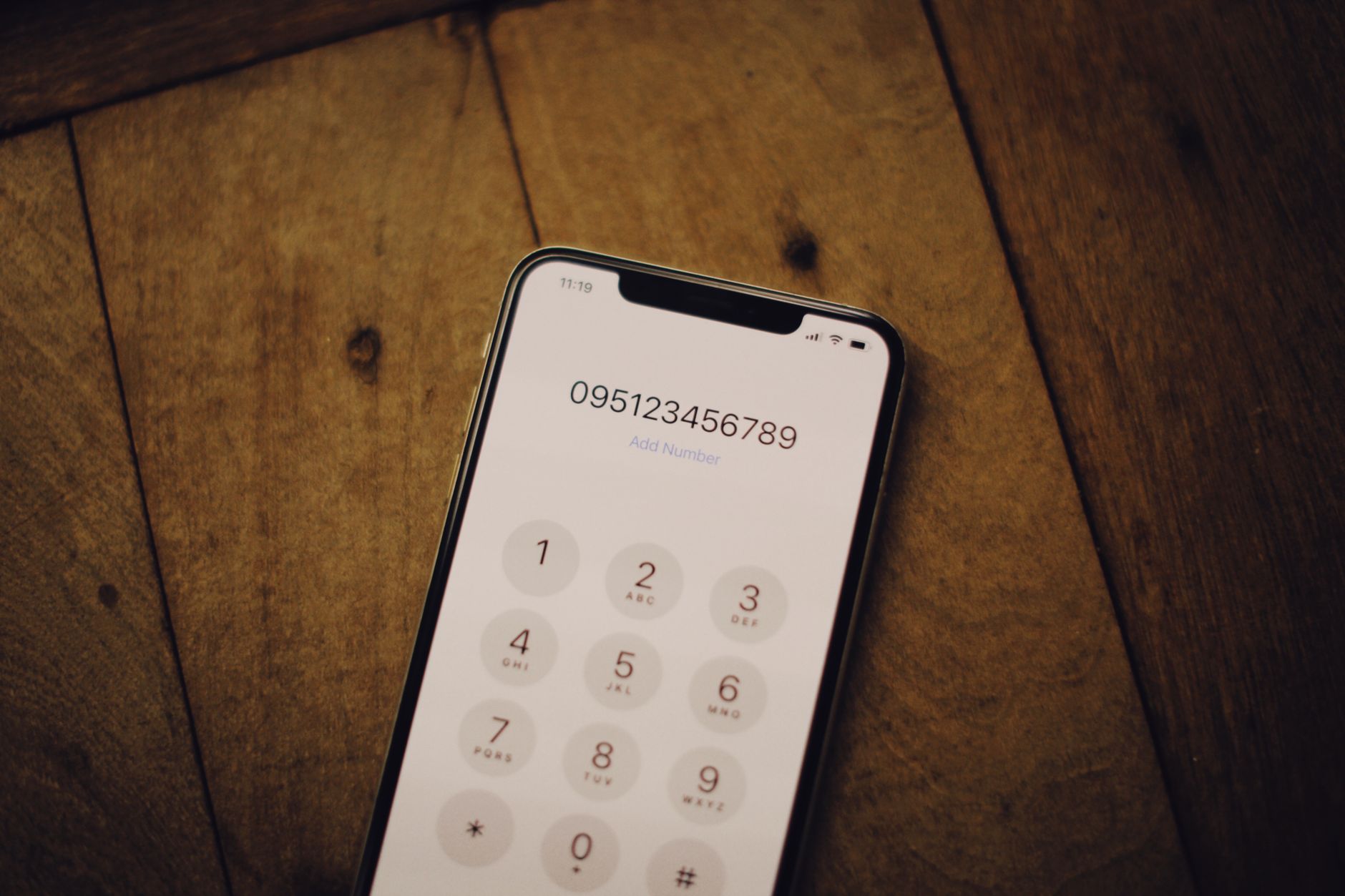
The agent says "please key in your card number, followed by the hash key". The caller types it on their phone keypad. Those keypresses (DTMF tones) are intercepted by the telephony provider before they reach the agent, the recording or the transcript. The provider sends the card details straight to the payment processor and hands back a token. The agent sees "payment succeeded, card ending 4242" and nothing else.
On Twilio this is the Pay feature. It needs PCI mode switched on for the account, which redacts payment data from every log, and it connects directly to Stripe. Twilio charges $0.15 per transaction through its Stripe connector, plus the normal per-minute voice cost. Twilio itself is certified as a PCI DSS Level 1 service provider, which is what lets you lean on it.
It works on any phone, including a landline. It's the method our AI call answering uses most.
Method 2: pay by link
The agent texts the caller a secure checkout link and stays on the line. The caller taps it, pays with their card or Apple Pay or Google Pay, and the payment processor tells the agent the moment it clears. The agent confirms the booking and says goodbye.
The card data never touches your phone system at all, only the processor's hosted page. It's also the smoothest method for anyone under 50 with a smartphone in their hand. It fails for landline callers, for people driving, and for anyone who struggles with a small screen, so it can't be the only option.
Method 3: card on file
A returning customer who has paid before has a saved payment method at the processor. The agent verifies who they are (more on that below), reads back "the Visa ending 4242?", and charges the saved token on a yes. No card data moves anywhere. For overdue balances, repeat bookings and monthly rent it's the fastest of the three.
The three methods side by side
| Keypad capture | Pay by link | Card on file | |
|---|---|---|---|
| Works on a landline | Yes | No | Yes |
| New customers | Yes | Yes | No |
| Card data reaches the AI | No | No | No |
| Wallets (Apple Pay, Google Pay) | No | Yes | n/a |
| Extra cost per payment | $0.15 on Twilio | One SMS | None |
| Typical time on the call | 60 to 90 seconds | 60 to 120 seconds | 15 seconds |
The timings are our own observations, not a published benchmark. A good agent offers the method that fits the caller and falls back to the next one when something fails.
What PCI DSS actually asks of a small business
PCI DSS is the card industry's security standard. The current version is 4.0.1, and the last of its new requirements became mandatory on 31 March 2025. Small merchants don't get audited. They fill in a self-assessment questionnaire (SAQ) once a year, and which one depends on how much of the card handling they've pushed to certified providers.
That's why the rule above matters commercially. If card data only ever touches Twilio and Stripe, your own systems stay out of scope and you answer the shortest questionnaire. If card numbers pass through your agent, your transcripts or your recordings, you're on SAQ D, the long one, with over 200 requirements that you now have to meet yourself.
Recordings and transcripts
Most AI agents record and transcribe every call, which is how you improve them. Call centres used to handle card payments by having the human agent pause the recording. The PCI Security Standards Council's guidance on telephone payments is blunt: a security code must not remain in a recording once the payment is processed, and pause-and-resume started by a person needs regular checks, because people forget. The fix has to be technical. With keypad capture the tones are removed before the recording point. With pay by link and card on file there's nothing to remove.
UK and EU: strong customer authentication
Online card payments in the UK and EU usually need two-factor approval from the cardholder's bank (3-D Secure). Telephone orders don't. Mail order and telephone order payments, MOTO in card-industry language, are outside the strong customer authentication rules, as long as the payment is flagged as MOTO. Stripe marks keyed-in telephone payments that way, and Twilio's Stripe connector tags its payments as MOTO too. The cardholder's bank still makes the final call and can decline.
Pay by link is different. That's an ordinary online payment, so the checkout page runs 3-D Secure when the bank asks for it. The caller just approves it in their banking app while still on the line.
Fraud checks that still apply
Exempt from two-factor doesn't mean exempt from fraud. A phone payment is a card-not-present payment, and chargebacks land on you. The controls we build in:
- Address and security-code checks at the processor, declined on mismatch.
- A cap on the amount the agent can take without a human approving it.
- Limits on attempts: three failed cards on one call ends the payment flow.
- For card on file, identity first. Two facts only the customer knows, not a name and a date of birth.
- A texted receipt straight away, so a genuine customer spots a payment they didn't make.
What it costs
Stripe's card fees are 2.9% plus 30 cents in the US and 1.5% plus 20p for UK cards. Keypad capture adds Twilio's $0.15 per transaction. The call itself is $0.10 to $0.25 a minute all-in. So a $129 deposit taken by keypad on a three-minute call costs about $4.04 in card fees, $0.15 for the capture and well under a dollar for the call.
The cost of getting it wrong is larger. Card brands fine through the acquiring bank, and published figures run from $5,000 to $100,000 a month for ongoing non-compliance. Small merchants more often see a processor's non-compliance fee of $19 to $99 a month, until there's a breach, when the forensic investigation and the chargebacks arrive together.
What goes wrong in practice
- Mis-keyed digits. The processor rejects the number, the agent asks them to try again, once.
- Speakerphone and car kits. Some mangle keypad tones. The agent falls back to a link.
- Timeouts. The caller goes to find their wallet. The agent waits, prompts once, then offers to text a link they can pay later.
- Declines. The agent says the card was declined (never why, it doesn't know), offers another card or a link, and hands off to a person if that fails too.
Five questions to ask any vendor
- Can your agent hear or transcribe the card number at any point?
- Who is the certified provider capturing the card, and can I see their attestation of compliance?
- What appears in the recording and the transcript during the payment?
- Which self-assessment questionnaire will I be completing with your setup?
- What happens when the keypad capture fails?
A vague answer to the first question ends the conversation.
For which calls an agent should take at all, and which it should hand to a person, see what AI can and can't do on a business phone line.
Questions people ask about phone payments and PCI
Can an AI agent take card payments over the phone?
Yes, three ways: keypad capture with the tones hidden from the agent, a payment link texted during the call, or a charge to a card already on file. In each one the card number goes straight to a certified payment provider and the AI never hears or stores it.
Is it PCI compliant for a caller to read their card number to an AI?
It puts the speech engine, the AI model, the transcript and the recording in PCI scope, and a transcript containing the security code breaks the rule against keeping it after authorisation. A properly built agent refuses spoken card details and moves the caller to keypad entry or a link.
What is DTMF masking?
DTMF tones are the beeps a phone keypad makes. Masking intercepts them at the telephony provider during card entry, so the agent, the recording and the transcript get silence or a flat tone while the digits go to the payment processor.
Which PCI questionnaire does a small business complete?
It depends how much card handling is outsourced. If card data only touches certified providers such as Twilio and Stripe, you complete one of the short self-assessment questionnaires. If card numbers pass through your own systems or recordings, it's SAQ D, with over 200 requirements.
Do phone payments need 3-D Secure in the UK and EU?
No. Telephone orders flagged as MOTO are outside the strong customer authentication rules, though the cardholder's bank can still decline. A payment link sent during the call is a normal online payment, so 3-D Secure applies there when the bank asks for it.
What does it cost to take a payment on an AI call?
Normal card fees (2.9% plus 30 cents in the US, 1.5% plus 20p for UK cards on Stripe), plus $0.15 per keypad payment on Twilio, plus $0.10 to $0.25 a minute for the call. A $129 deposit on a three-minute call costs under $5 all-in.