

The build is the big number and the model bill is the small one. A budget for one automated workflow, line by line, with the token maths, the server, the review queue and the month it pays back.
As an illustration, a single AI automation for a small business costs somewhere around $15,000 to build and $400 to $450 a month to keep running, plus the staff time spent on the cases it flags. In the illustrative example further down it pays for itself in about five months. Both figures are worked out below from published wage and price data plus stated assumptions, not taken from anyone's quote. The surprise for most owners is where the money goes. The model bill is the smallest line. The developer time up front and the people who still check the hard cases are the big ones.
The short budget
Here are the lines for one workflow, say order emails or support tickets, at small business volume. Every number is explained in its own section.
| Line | When you pay | Illustrative figure |
|---|---|---|
| Build: audit, design, build, testing | Once | About $15,000 (160 developer hours) |
| Model tokens | Monthly | $1 to $55 |
| Server for the queue and logs | Monthly | $12 to $24 |
| Upkeep: model changes, new edge cases | Monthly | About $375 (4 hours) |
| People reviewing flagged items | Monthly | Often the biggest line |
Treat the table as a shape rather than a quote. Your volumes move the monthly lines, and the number of systems the workflow touches moves the build.
What AI automation costs to build
Building means connecting the inbox or form to your CRM or accounting package, writing the instructions the model follows, adding checks on its output, and building the screen where a person approves the doubtful ones. That's software work, and it's priced in hours.
To get a number you can check, start from the Bureau of Labor Statistics: the median software developer earned $135,980 a year in May 2025, which is about $65 an hour over a 2,080-hour year. The BLS employer costs release for June 2026 puts benefits at 30.0 percent of total compensation in private industry. Wages are the other 70 percent, so $65 divided by 0.7 gives roughly $93 an hour for an in-house developer.
A first workflow with two or three integrations and a review screen is, as an illustration, about four weeks of one developer: 160 hours, close to $15,000. A workflow that touches one system and needs no review screen can be half that. One that has to read scanned paperwork from six suppliers can be double. Agencies price differently, so use this as a yardstick when you compare quotes, not as a price list.
Our own AI automation for small business work starts with an audit in week one, and the first automation is typically live within two to four weeks. That's calendar time. Hours are what you're billed for, so ask for both when you get a quote.
What the AI model costs per month
Model providers charge per million tokens, read and written separately. A token is a short chunk of text, often part of a word. Anthropic's published rates are $0.10 in and $0.50 out for Claude Haiku 5.5 on prompts up to 100,000 tokens, $2 and $10 for Sonnet 5.5, and $4 and $20 for Opus 5.5. OpenAI's API pricing page lists gpt-6-luna at $0.10 and $0.50, and gpt-6.1-terra at $1 and $5.
Here's an illustrative month: a business answering 3,000 support tickets, where each request sends about 2,500 tokens (the ticket, the customer's order history and the relevant policy text) and gets back about 400. That's 7.5 million tokens in and 1.2 million out.
| Model | Price in / out per million | Month at 3,000 tickets |
|---|---|---|
| Claude Haiku 5.5 | $0.10 / $0.50 | $1.35 |
| gpt-6-luna | $0.10 / $0.50 | $1.35 |
| gpt-6.1-terra | $1 / $5 | $13.50 |
| Claude Sonnet 5.5 | $2 / $10 | $27 |
| Claude Opus 5.5 | $4 / $20 | $54 |
Even the most expensive row is less than an hour of a developer's time. That's why we'd never pick a model on price. Pick the cheapest one that gets your real examples right, and check it on a few hundred of them before you decide.
Documents change the picture a little. A month of 1,500 supplier invoices at 12,000 tokens each, with 600 tokens of extracted fields back, comes to $45 on Sonnet 5.5 and $2.25 on Haiku 5.5. Still small.
Two discounts worth knowing about
Both providers halve the price for batch requests, which are processed in the background rather than straight away. Anthropic applies the 50 percent cut to input and output. That's fine for a nightly report or a backlog of old invoices, and wrong for a customer waiting on a reply.
The other is caching. Instructions and policy text that go out with every request can be cached, and a cache hit on Sonnet 5.5 is billed at $0.10 per million tokens instead of $2. In the support example most of each prompt is the same policy text, so caching can take a large share off the input side.
Where the automation runs
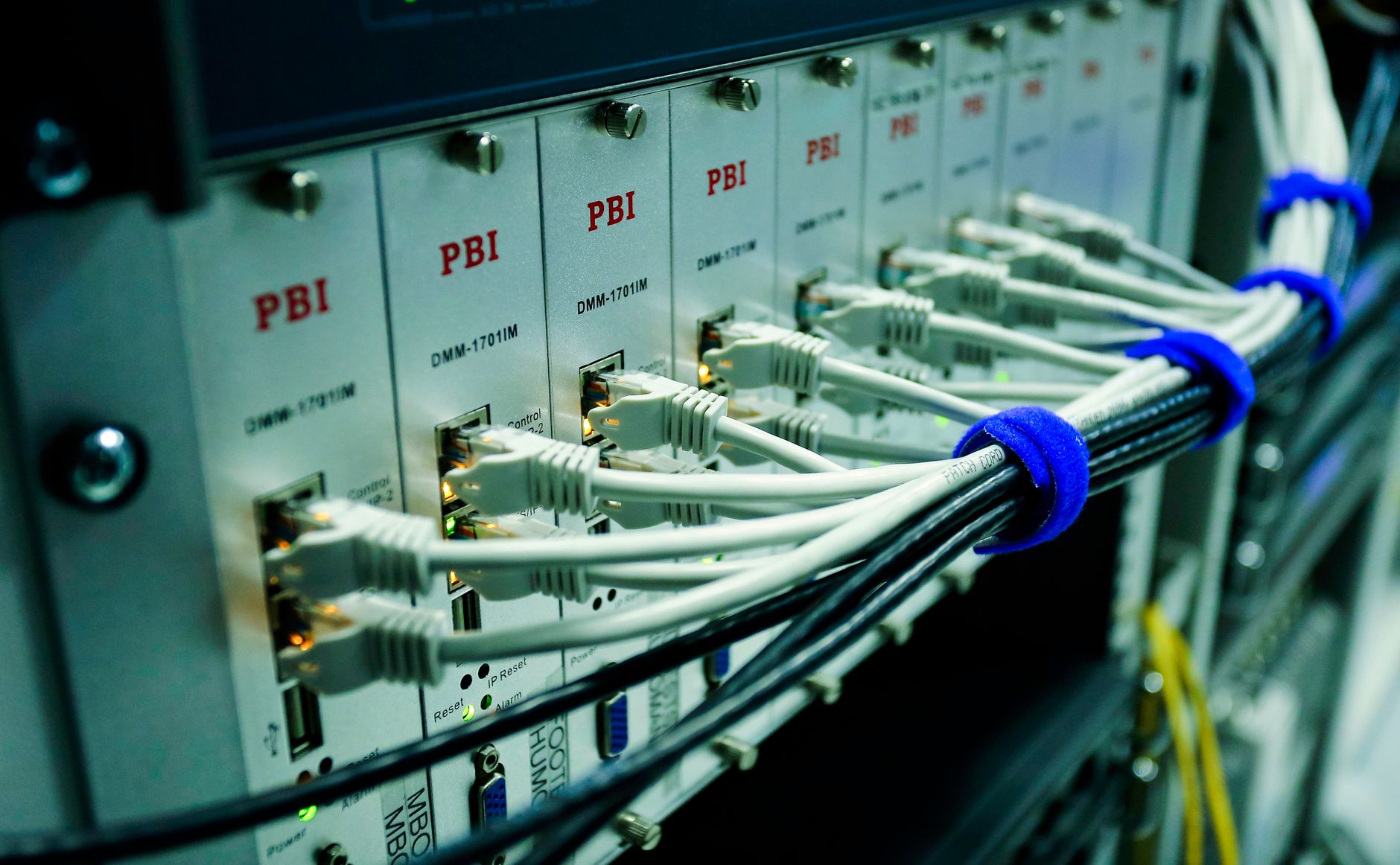
The model runs at the provider. Your code doesn't: something has to receive the email or webhook, call the model, run the checks, write to your systems and keep a log of every action. For one or two workflows that's a small virtual server. On DigitalOcean's droplet pricing, a basic droplet with 2 GiB of memory is $12 a month and 4 GiB is $24.
We'd start on the $24 size if the workflow reads PDFs or images, since that processing is heavier than the model call. A $6 droplet with 1 GiB will run a light queue, but you'll outgrow it the week volume doubles.
The cost nobody budgets: the review queue
A well built automation doesn't send everything through untouched. It flags what it isn't sure about: an order with a product code it can't match, a supplier it has never seen, a refund over a set amount, a customer who's angry. A person handles those.
Say 10 percent of the 3,000 tickets get flagged and each takes four minutes. That's 20 hours a month. At the $46.89 per hour that the same BLS release gives as the average total cost of a private industry employee, it's about $940 a month, against a model bill of $27.
Owners who skip this line think they've bought something that costs $50 a month. Lower the flag rate after launch, by tightening the checks on the cases that keep getting flagged, and this is the line that falls fastest. If you want to see where those checks sit in a real flow, there's a walk through of automating email triage and order processing with the review step in it.

Upkeep after launch
Models get retired. Anthropic's pricing page already marks Claude Opus 4 and Sonnet 4 as retired, apart from on some cloud platforms. When a model you depend on goes, the workflow has to be moved to a new one and re-tested against your saved examples. APIs on your side change too, and new kinds of input turn up that the checks never saw.
Budget a few hours a month. In this guide that's four hours at the $93 developer rate, about $375. Some months need none, and a model change can take a full day.
When does AI automation pay back?
An illustrative business has two people each spending 10 hours a week keying orders from email into its system. That's about 87 hours a month, or $4,064 at $46.89 an hour.
The calculator on our automation page assumes AI takes about 80 percent of repetitive work. Use the same figure here: $3,251 of that time comes back each month, and the other 20 percent is the review queue. Take off $27 in tokens, $24 for the server and $375 of upkeep and the net is about $2,825 a month. Against a $15,000 build, that's paid back in a little over five months.
Change one input and the answer moves a lot. At 4 hours a week per person rather than 10, the net drops to about $875 a month and payback stretches to 17 months. That's the real test: if the task takes less than a few hours a week of someone's time, the build cost won't come back quickly, however cheap the tokens are.
How to budget your first workflow
Measure before you price anything. For two weeks, have the people doing the task log how many items they handle and how long each takes. Count how many they had to stop and ask someone about, because that number is your starting flag rate.
With those three counts you can fill in every line of the table at the top. Take them to any quote and ask how the price changes if the volume doubles.
Questions owners ask before they set a budget
What is the cheapest way to start?
Pick one workflow with a clear volume, such as order emails or invoice entry, and price only that. A single workflow on a small model and a $12 server is the floor. Spreading the first budget across five workflows is how projects stall.
Will the model bill grow as we grow?
Yes, in a straight line with volume, but from a low base. In the support example above, doubling to 6,000 tickets a month takes the Sonnet 5.5 line from $27 to $54. The review queue grows at the same rate and costs far more, so watch that one.
Can we cut the token bill further?
Two ways. Both Anthropic and OpenAI charge half price for batch requests, which suits overnight reports and back-office jobs that can wait. And repeated instructions or reference text can be cached, which Anthropic bills at $0.10 per million tokens on Sonnet 5.5 instead of $2.
Do we have to pay for a big model?
Not for the whole job. Classification and simple extraction often run fine on Haiku 5.5 or gpt-6-luna. Test on a few hundred of your own real examples and move up a tier only for the step where the small model gets things wrong.
How long before the first automation is running?
The first automation is usually live two to four weeks in, after an audit in week one. That is the calendar time, which is different from the developer hours you are paying for.